A custom glass ornament does not have to depict Santa Claus, a snowflake, or even a traditional Christmas symbol. For brands, the more memorable idea may be something customers already associate with the business: a distinctive sofa, a favorite sneaker, a signature dessert, or a recognizable vehicle.
Turning a real product into a miniature hand-blown, hand-painted glass ornament can create a keepsake that connects the brand to a specific object or experience. The opportunity extends beyond Christmas retail collections to gifts, merchandise, launches, and souvenirs. The strongest concepts begin with a clear purpose, not simply an unusual shape.
1. Start with a Recognizable Brand Asset
Before selecting a theme, ask what customers would recognize without reading the company name. It might be a product silhouette, a distinctive color combination, a shopfront, or an item strongly associated with the brand. A miniature ornament works best when the subject remains identifiable at a smaller scale.
For example, a furniture brand might use the outline of its best-known chair; a bakery might choose a signature pastry; an automotive brand might feature a recognizable vehicle model. These examples show how recognizable products can inspire branded ornament designs.
Buyer takeaway: Choose one hero object first. A clear silhouette and a few defining details are often more effective than trying to reproduce every feature of the original.
2. Six Industry Ideas for Custom Glass Ornament Collections
Different industries can use the same underlying approach—transform a familiar object into a small decorative collectible—but the design priorities vary.
| Industry | Possible Ornament Subject | Potential Use |
|---|---|---|
| Furniture & interiors | Sofas, chairs, lamps, distinctive home accessories | Showroom gifts, design launches, collector sets |
| Fashion & footwear | Sneakers, dresses, handbags, jackets | Brand merchandise, seasonal gift collections |
| Food & beverage | Signature pastries, burgers, bottles, coffee cups | Restaurant merchandise, loyalty gifts, retail souvenirs |
| Automotive & transport | Cars, buses, delivery vans, iconic transport shapes | Dealer gifts, branded collections, event keepsakes |
| Travel & hospitality | Landmarks, hotels, cabins, local icons | Destination souvenirs, hotel gift-shop collections |
| Sports & hobbies | Equipment, jerseys, balls, hobby objects | Club merchandise, commemorative gifts, themed retail |
These examples are starting points for design discussions. Whether a specific shape is practical depends on its geometry, required details, dimensions, and the manufacturing approach.
3. A Real Example: Eight Sofa Designs Turned into Glass Ornaments
One DuoLeiMi furniture-industry customer commissioned eight custom glass ornament designs inspired by eight actual sofa models. Instead of choosing standard holiday motifs, the customer used recognizable furniture shapes as the basis for a distinctive ornament collection.
The two ornaments pictured below illustrate different shapes and decorative finishes developed for custom glass ornament collections.
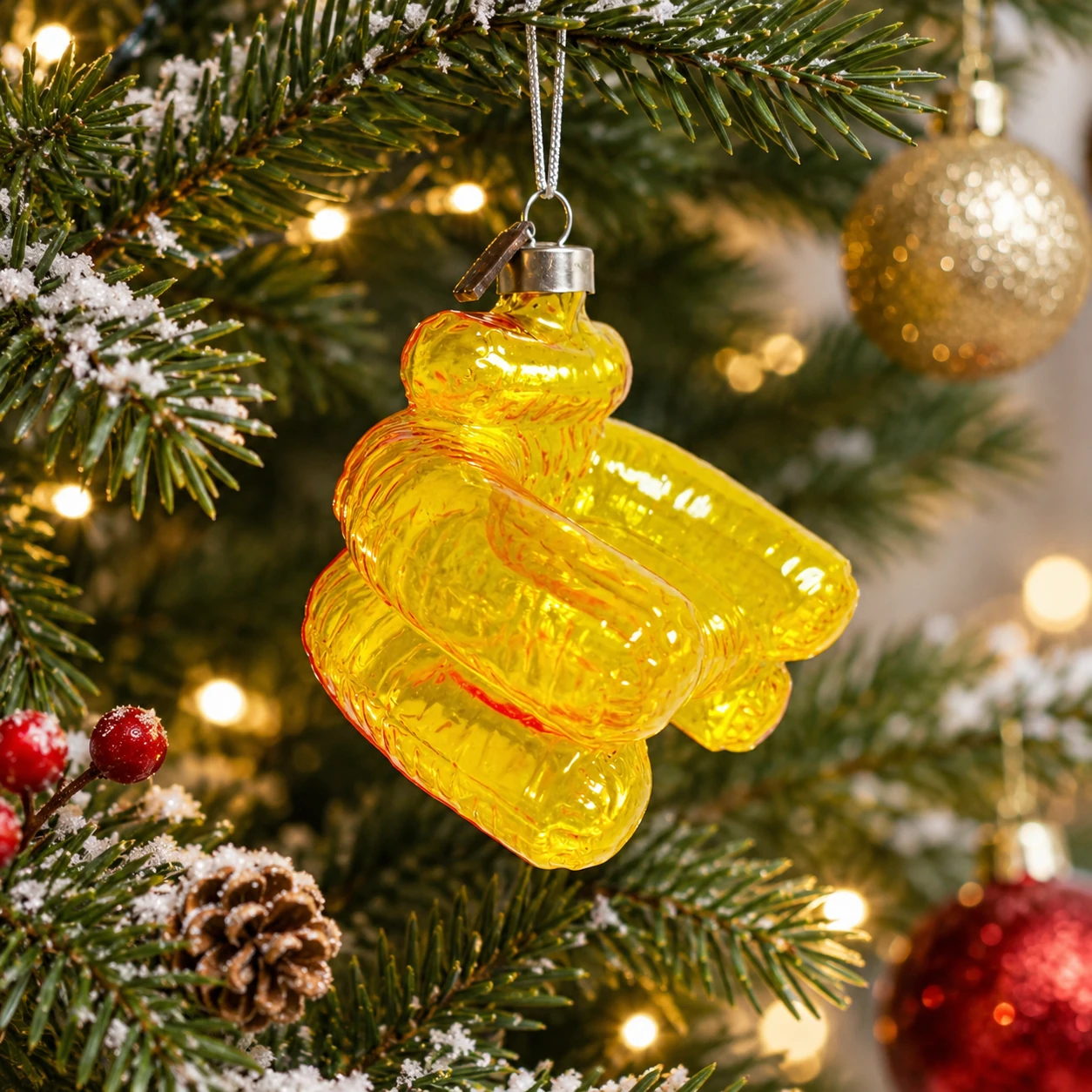
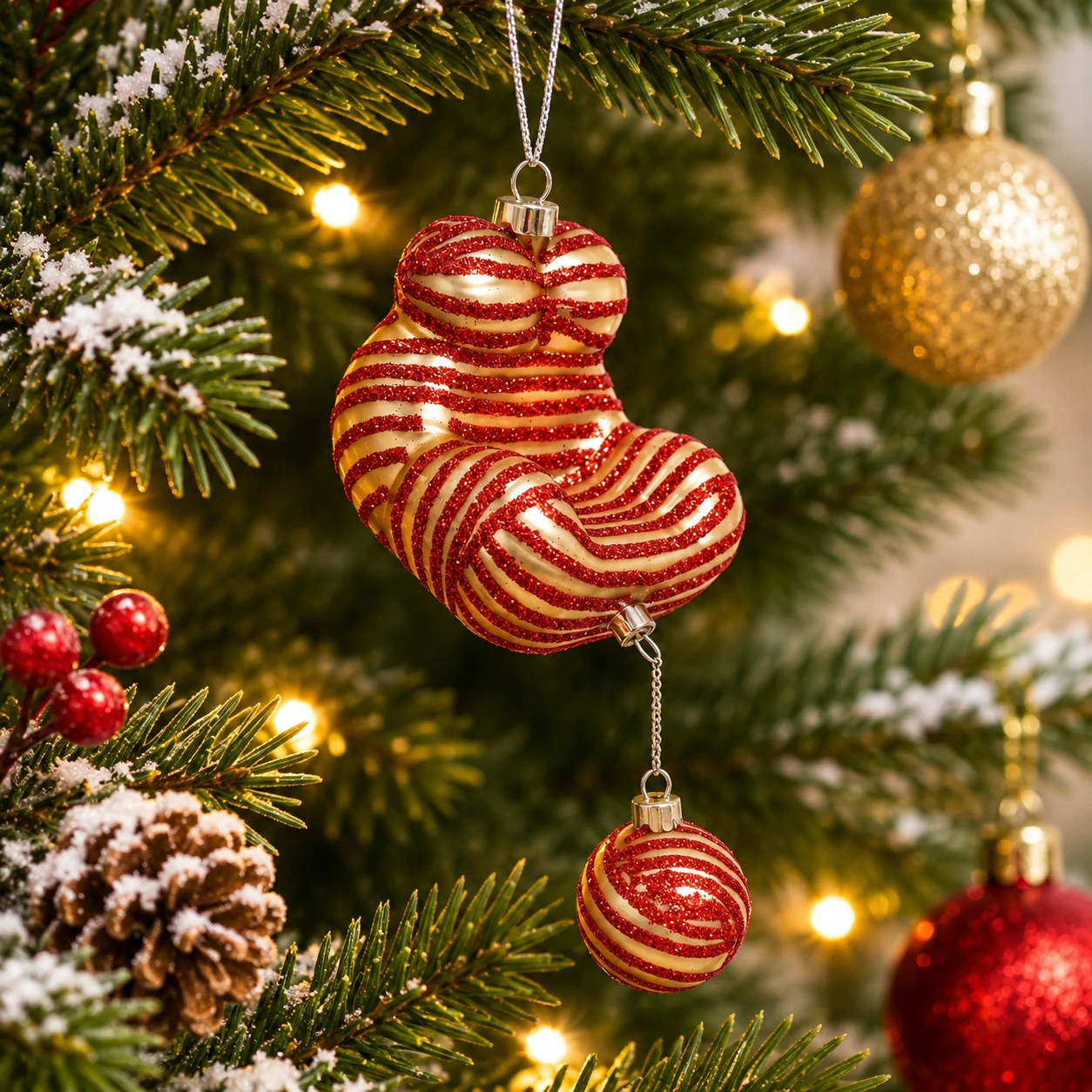
For brands planning a similar project, the practical starting point is a clear reference image of each signature product. Compare the silhouette, key decorative details, hanging orientation, and protective packaging before approving samples. Different designs in one collection can share a consistent presentation while retaining their own recognizable features.
4. Choose the Right Purpose Before Developing the Shape
The intended use affects the ornament design, presentation, and packing requirements. A gift for selected business partners may have different priorities from a product intended for sale in hundreds of retail stores.
- Retail merchandise: focus on shelf appeal, recognizable designs, consistent presentation, and labeling requirements.
- Corporate gifts: consider whether the object has a clear connection to the recipient, brand story, or event.
- Product launches: use the ornament to highlight one recognizable product or design feature.
- Tourism souvenirs: prioritize distinctive local imagery and an easily understood subject.
- Collectible series: plan how different designs relate in scale, color, and packaging.
A collection does not need many designs to be effective. Buyers can begin with one recognizable item, then evaluate whether additional designs make sense as a coordinated range.
5. Translate a Full-Size Product into a Glass-Friendly Design
A full-size object cannot always be reproduced detail for detail at ornament scale. The design needs to account for the glass body, protruding elements, hanging position, and areas to be painted.
For DuoLeiMi's shaped hand-blown ornaments, development involves a clay model, steel mold, hand-blown glass blank, silvering, and hand painting. This means the outline is not merely printed on a standard glass ball: the physical form needs to be considered during mold development.
Identify the outline or feature that makes the original product recognizable.
Decide which tiny features can be represented through painting rather than complex geometry.
Discuss narrow handles, straps, legs, corners, and other potentially delicate areas.
Specify key brand colors, logo placement, and any lettering that must remain readable.
Review the orientation and how the ornament should appear when suspended.
Consider protective inserts or cushioning for the final shape, especially when parts extend outward.
The sample stage is the appropriate point to review the three-dimensional form, painted details, and overall presentation together before approving a larger order.
6. Build a Cohesive Collection Without Making Every Piece Identical
When a brand develops several ornaments, the collection should feel connected while allowing each design to retain its identity. Buyers can establish shared guidelines for approximate scale, finish, color treatment, hanging accessories, and retail packaging.
For example, a footwear collection might feature different shoe models with consistent packaging; a restaurant group might create several recognizable dishes; a furniture brand might turn a set of signature pieces into matching miniatures.
Consider how each ornament looks alone and how the designs appear together in product photography, on a display tree, or inside a gift set.
7. What Buyers Should Prepare for a Brand-Ornament Project
A useful initial brief helps the manufacturer understand both the product and the commercial goal. It does not need to be a finished technical drawing, but it should clarify the features that matter most.
- Clear photographs or drawings of the original product from several angles.
- Target ornament dimensions and any required proportions.
- Brand colors, logos, lettering, and details that must be preserved.
- Expected quantity for each design and whether it is a single item or a series.
- Intended use: retail, corporate gifting, souvenir, or product launch.
- Preferred packaging: neutral protective packing, window or non-window color box, or gift box.
- Any target launch or delivery date, so feasibility and scheduling can be discussed.
For projects based on third-party brands, characters, or products, buyers should ensure they have the appropriate rights or permission to use the designs and marks.
8. Beyond the Holiday Season: Make the Object Worth Keeping
Although glass ornaments are closely associated with Christmas, a brand-specific miniature can also serve as a year-round keepsake. A product-shaped ornament may remind someone of a purchase, a place they visited, a company milestone, or a memorable event.
The most useful question for a buyer is not simply, “Can this be made into an ornament?” It is, “Why would our customer want to keep this particular object?” A clear answer helps guide the design, presentation, and intended audience.
DuoLeiMi develops custom hand-blown and hand-painted glass ornaments from customer designs. Brands exploring product-shaped ornaments can share their reference images and project requirements to discuss design development, sample review, packaging options, and quotation. The final specifications should be confirmed for each project.
Frequently Asked Questions
Q1: What kinds of branded products can be turned into custom glass ornaments?
Possible subjects include furniture, shoes, clothing, food, beverage bottles, vehicles, buildings, and other recognizable objects. The key considerations are whether the subject remains identifiable at ornament scale and whether its shape can be developed appropriately for glass production.
Q2: Do custom product-shaped glass ornaments need a mold?
For mold-blown, shaped glass ornaments, a mold is part of the manufacturing process. A clay model can be developed first, followed by a steel mold for blowing the glass form. The exact development requirements depend on the design and production method.
Q3: Can a brand create a collection with several different ornament designs?
Yes. A coordinated collection can include multiple product shapes while sharing a consistent scale, color approach, hanging style, or packaging presentation. Each design should still be reviewed for its own manufacturing and packing needs.
Q4: What files should buyers send to start a custom ornament project?
Start with clear product photographs or drawings, approximate dimensions, key brand colors, logo artwork if needed, and the intended order quantity. Multiple viewing angles help communicate three-dimensional features. Packaging references and the planned use are also useful.
Q5: Are custom glass ornaments only suitable for Christmas promotions?
No. They can also be considered for brand merchandise, company gifts, product launches, commemorative collections, and destination souvenirs. The most suitable design and presentation depend on the audience and how the item will be distributed.
Turn Your Brand's Signature Product into a Glass Ornament
Have a product, logo-inspired object, or collection idea in mind? Share the real product photos or drawings with DuoLeiMi to explore a custom hand-blown and hand-painted ornament concept.